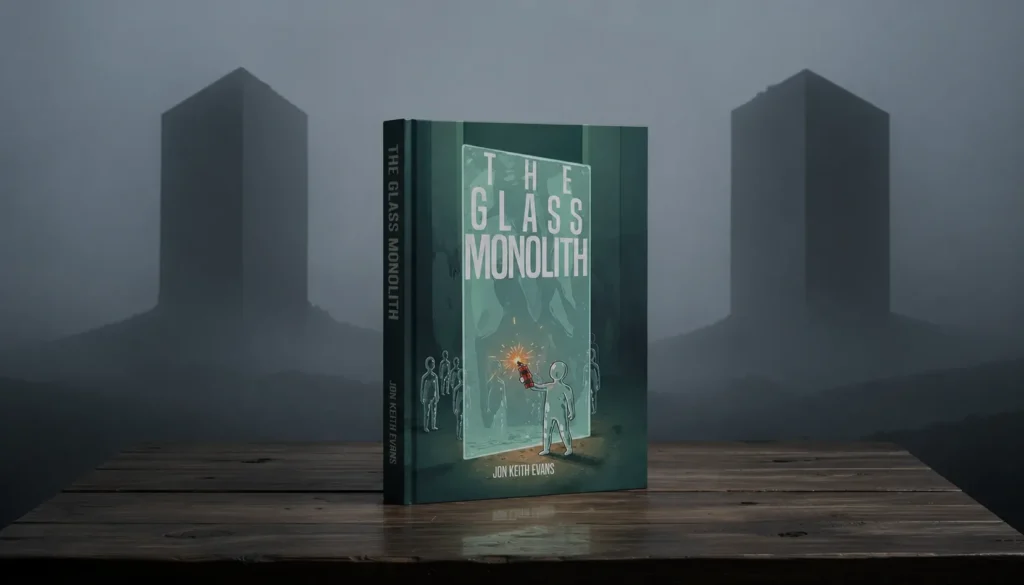
Some people move through life performing competently while wondering why everything costs them more. Jon Keith Evans was that person for 47 years. He mastered technical writing, built a career in Chicago, and attended two Olympic Games. Yet something was always slightly wrong in ways no one could name. The Glass Monolith emotional life story is his account of those years, and Jon K Evans has written something that does not just inform. It stays.
The Glass Monolith Emotional Life Story Between Worlds
Most memoirs follow a recognizable shape: crisis, insight, transformation. Jon Keith Evans refuses that shape. His story offers no clean turning point. Instead, it offers a life examined with analytical precision, laid out without embellishment, trusted to speak for itself.
Who Is Jon Keith Evans and the Journey Behind His Memoir
Before Jon Keith Evans became the voice behind Jon K Evans, he was a telephone operator at Illinois Bell, a technical correspondent at Underwriters Laboratories, and a data specialist praised for accuracy while losing job after job for reasons no one could explain. He completed his degree after eight and a half years across four universities, then earned a Post-Baccalaureate Certificate in Technical Communications. Late-diagnosed autism memoir with Asperger’s is a phrase that flattens people into a condition. Evans refuses that flattening.
What moved him toward writing was accumulation, not drama. After a near-termination at Underwriters Laboratories, a neurologist at Northwestern Memorial Hospital asked: “Have you considered the possibility that you might be autistic?” The diagnosis that followed confirmed Pervasive Developmental Disorder, Hyperlexia, and Information Processing Disorder. The answer had always been there. It had no name until then.
The Glass Monolith: The Book That Grew Out of a Lifetime of Searching
Glass suggests fragility. A monolith suggests something immovable and largely invisible unless you know where to look. That tension is exactly what Evans navigated for 47 years: visible enough to function, hidden enough that the real story never surfaced until it had to.
This is what separates resilience life story books that earn that word from those that borrow it. Three disability benefits denials before approval on the fourth attempt. Decades of showing up without a framework for why things kept going wrong. That is not inspiration. That is something quieter and harder.
What This Memoir Offers That Others in Its Category Do Not
When readers search for the best real-life story books, they want a mirror or a window. This memoir delivers both. It speaks to adults who succeeded in narrow lanes while struggling in ways they could never explain, and gives families and employers a ground-level view of what undiagnosed autism looks like across a working life.
Here is what this book covers that others in this space do not:
- Eight and a half years across four universities, with no diagnosis to explain the struggle
- Workplace experiences where strong technical skills coexisted with unexplained professional friction
- A decade-long search involving neurologists, psychologists, and sleep specialists
- Three disability benefits denials before a fourth attempt finally succeeded
- The role of smooth jazz as an emotional structure during the hardest stretches of his life
Where The Glass Monolith Fits Among Neurodiversity Memoir Books Worth Reading
This memoir joins the tradition of Temple Grandin and John Elder Robison but adds something those books do not: the experience of a working professional navigating workplaces before adult autism was recognized. His prose is spare. Facts do the emotional work. That restraint mirrors the life it describes.
For readers drawn to an emotional personal journey book, the appeal here isn’t melodrama but accumulation, small moments that quietly add up to something larger. It belongs alongside other impactful true story books precisely because it doesn’t try to be impactful; the weight comes from the facts themselves. And for anyone building a list of real-life inspirational reading books, this one earns its place by trusting the reader to feel what the author never states outright
What Readers Are Finding
| What Readers Look For | What This Memoir Delivers |
| An emotional personal journey book without manufactured drama | 47 years told with precision and no performance |
| A resilience life story book that earns the label | Persistence across job losses, denials, and a decade-long diagnostic search |
| Best real-life story books about late diagnosis | Detailed adult Asperger’s memoir written from inside a working career |
| Impactful true story books for educators and HR professionals | Practical insight into autism in the workplace and academic settings |
| Real-life inspirational reading books without cliche uplift | A story that builds meaning slowly, the way real lives do |
Conclusion: A Story That Was Always There, Finally Told
Jon Keith Evans is one of the most reliable narrators in recent memoir writing because he spent decades questioning his own perception before drawing conclusions. The Glass Monolith’s emotional life story waited until the picture was complete before putting it into words. The result, from Jon K Evans, is a book that does not ask to be admired. It asks to be read. That is more than enough.
FAQs
Q: What is The Glass Monolith’s emotional life story about?
A memoir covering 47 years of living with undiagnosed Asperger’s Syndrome. It documents educational struggles, career experiences, a diagnostic search spanning a decade, and disability benefits approval, told without embellishment.
Q: Is this among the best real-life storybooks for people without autism?
Yes. It speaks to anyone who has felt out of step without explanation. Educators, HR professionals, and family members will find practical insight alongside the personal narrative.
Q: How does it compare to other impactful true story books on neurodiversity?
Most autism memoirs focus on childhood or the parental perspective. Evans writes as an adult without answers for 47 years, making his workplace and late-diagnosis account unique in this genre.
Q: Does this count among real-life inspirational reading books that avoid clichés?
Yes. Evans uses no motivational language. The inspiration comes from the quiet dignity of someone who kept showing up without ever fully knowing why things were so hard.
Q: Is this a good resilience life story book for a book club?
Yes. Questions about identity, institutional bias, and the cost of going undiagnosed generate strong discussion. Jon Keith Evans also participates in speaking engagements that complement group reading.