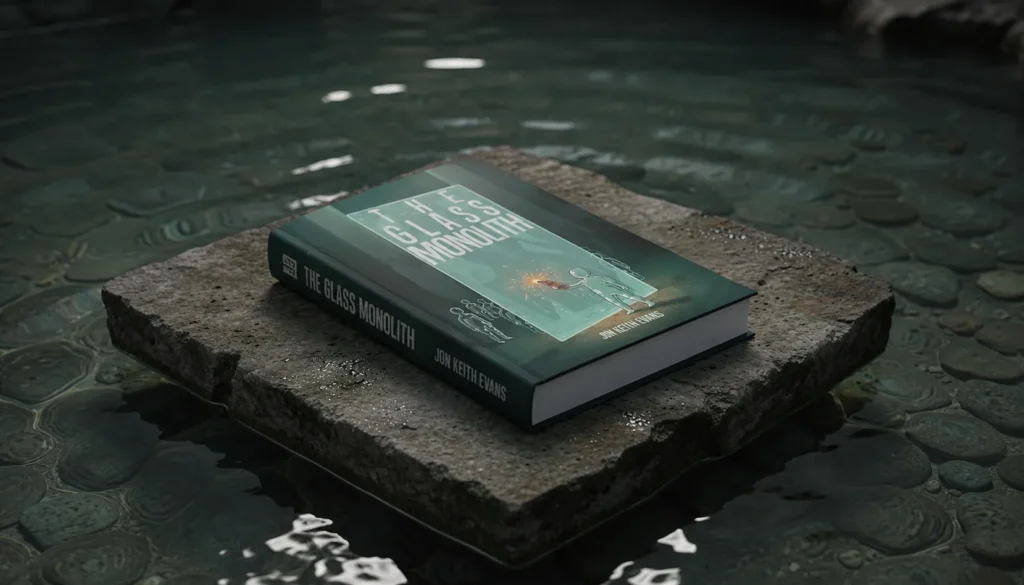
You know the feeling. You are reading a book. Then, somewhere around page thirty, you stop, set it down, and just sit there. Not because something surprised you. But because something recognized you. That is the quiet power of real life experience books. They do not perform or persuade. Instead, they simply tell the truth. And in doing so, they reach something in the reader that fiction rarely can. Jon Keith Evans did not set out to become a writer. His goal was to understand his own life.
Why Real-Life Experience Books Reach the Places Other Books Cannot
The events in a memoir are real. The writer carefully rebuilds the inner life from memory. And somewhere between those two things, if the writer stays honest, something universal quietly emerges.
That is what has always set the best memoir books to read apart from the ones quickly forgotten. It is not the drama of the events. Rather, it is the honesty of the telling. The best memoir books to read come from people who paid the most careful attention to the lives they actually had.
A Technical Writer Who Carried a Story He Did Not Yet Know How to Tell
Jon Keith Evans spent decades taking complex information and making it clear. He worked at Illinois Bell and Underwriters Laboratories. He also earned a post-baccalaureate degree in Technical Communications, believing that mastering language would solve the problem he could feel but not name. That belief did not hold. Jobs were still lost. Social situations that felt easy for everyone else felt, to him, like reading directions written in a language he had never learned.
Then came 2001. At age 47, a diagnosis of Asperger’s Syndrome arrived and reordered everything that had come before. Not by changing the past. But by finally making it legible.
The Glass Monolith Personal Journey Memoir and Self Discovery
That clarity produced a memoir sitting comfortably among the most meaningful life journey books published today. It is precise and unexpectedly moving, which is exactly what you would expect from a man whose whole career centered on clear, accurate communication.
Here is what makes it worth your time:
- Evans writes without self-pity. He describes what happened without asking you to grieve for him.
- Moreover, the book covers ground almost entirely absent from existing memoirs: late-diagnosed autism in a Black man navigating American professional life, where race and neurodivergence compound each other in ways rarely discussed.
- He also documents systems with full honesty. Three disability appeals came back rejected before the fourth succeeded. Evans records every failure with the care of someone who keeps every document.
The Glass Monolith Personal Journey Memoir and What the Title Is Really Saying
A monolith made of glass is fully visible and fully out of reach at the same time. You can see what is on the other side. You just cannot get there. That, Evans suggests, is what it feels like to live undiagnosed in a neurotypical world. Other people seem to follow the rules without effort. Yet the door never appears.
The Glass Monolith personal journey memoir is not a clinical book about autism. Instead, it gives you one man’s honest account of navigating a world not built for him, for nearly five decades, without knowing why. Among inspirational true-life books, vagueness is the enemy. Evans gives you the particulars, and in those particulars, something universal comes through. The most lasting inspirational true-life books always work that way.
The Reader This Book Was Quietly Written For
There is a specific reader who picks this up and feels, around chapter two, that it speaks directly to them. Perhaps they have spent years hearing that they are too literal, too sensitive, or too inside their own head. For that reader, the most affecting emotional personal journey book is not the one with the most dramatic events. Rather, it is the one that most accurately describes a confusion they have long carried alone.
Here is what that reader tends to take away:
- First, that struggling in specific, repeatable ways is not a character flaw. It is information, and once you have it, you can finally work with it.
- Second, that a late diagnosis is not too late. A map arriving at 47 still changes every journey taken after it.
- Finally, a sense of being truly seen. Not in a sentimental way, but in the way that precision delivers when applied to an experience you thought was entirely your own.
The emotional personal journey book that does this honestly is a rare thing. This one does.
The Neurodivergent Memoir as a Form of Advocacy
James Baldwin wrote that nothing can be changed until it is faced. At its core, a memoir is an act of facing. The neurodivergent memoir has earned its place in nonfiction because the people it serves have consistently gone underserved by the stories that get told. Most of what exists focuses on children, or on types of autism that are easy to spot. Evans, however, writes from somewhere else: the middle of a career, the aftermath of decades of confusion. Among meaningful life journey books, that perspective fills a real gap.
The best books in this space deliver specific things, and this one does all of them:
- A voice that trusts the reader with the full account, not just the parts that reflect well on the author.
- Additionally, a timeline told with full honesty, including the years that went wrong and the systems that let him down.
- Furthermore, a conclusion that does not wrap up too neatly, because real lives do not, and readers always know when a writer is managing them.
Conclusion
Most lives unfold quietly and only make sense in hindsight, if at all. What Jon Keith Evans refused to do was let his remain unread. Instead, he wrote it down honestly, without performing suffering or triumph. As a result, the book stands as one of the more quietly essential real-life experience books of recent years. Jon K Evans is a voice that deserves to be heard.
FAQs
What makes real-life experience books hit harder than fiction?
The events actually happened. As a result, the writer cannot soften them past a certain point without betraying the truth. That accountability, combined with the detail of a real life, gives a memoir a weight that constructed stories rarely match.
Is The Glass Monolith a personal journey memoir only for readers with autism?
Not at all. It speaks to anyone who has felt out of step without knowing why. Families, educators, and HR professionals will also find real value in understanding how neurodiversity and race intersect in American professional life.
How does Evans’ technical writing background shape the memoir?
The prose is precise without being cold. Every detail earns its place. That discipline makes the book more trustworthy and faster to read than memoirs written in a more overtly emotional style.
Is this an emotionally difficult read?
Honest is the better word, not heavy. Evans does not perform distress. Readers who share similar experiences tend to find it clarifying. Those who do not come away with a broader understanding of what life can look like when it goes undiagnosed for decades.
What makes this memoir distinctive in the late-diagnosis space?
Two things stand out. First, Evans received his diagnosis at 47, placing him at the older end of late-diagnosis memoirs. Second, and just as importantly, the intersection of Blackness and neurodivergence in American professional life barely exists in the genre. This book fills both gaps.